Future of Product Days 2026
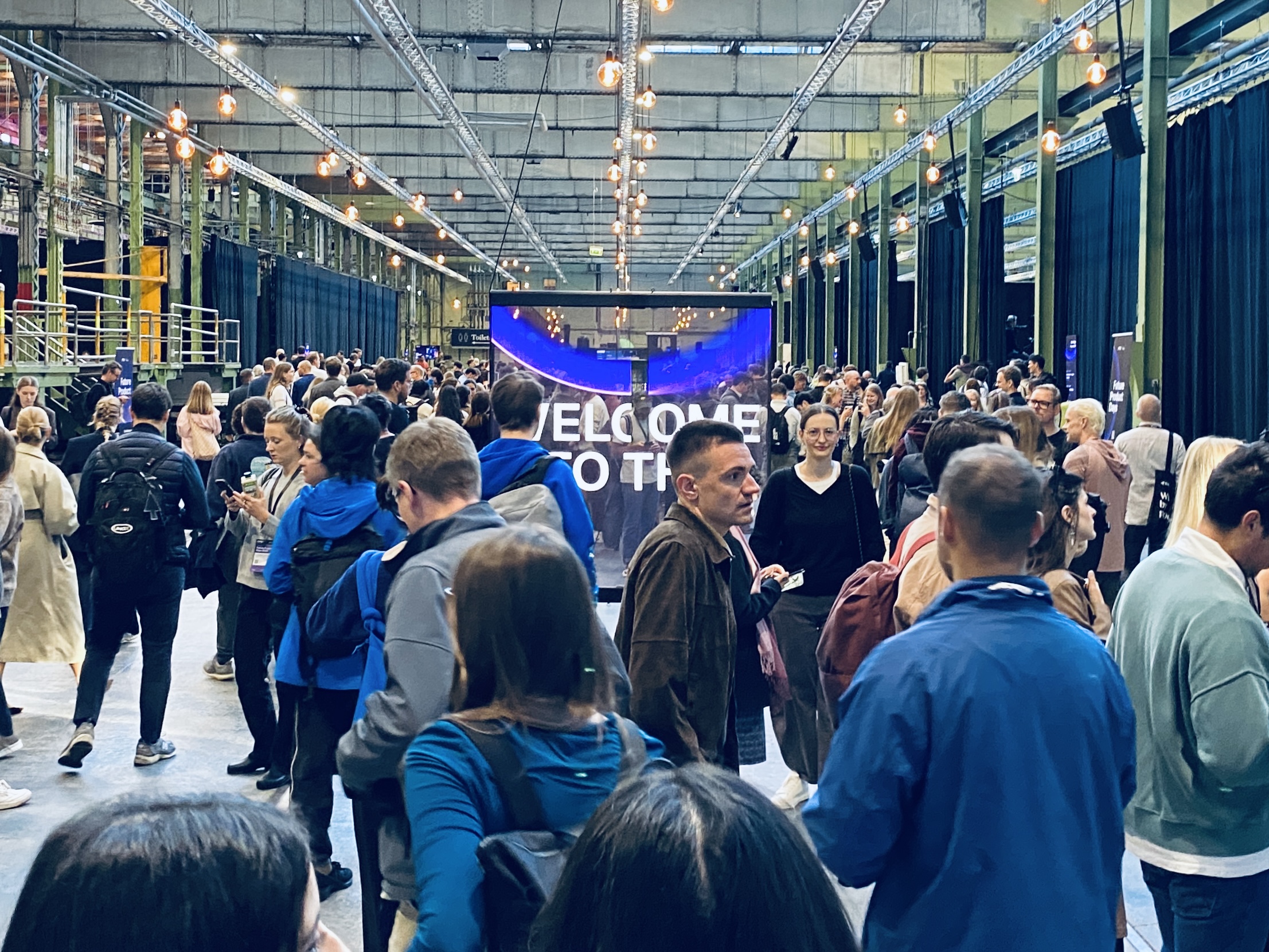
Together with my two awesome colleagues Lyssa and Lujane from Branch, we had the opportunity to go to FPD 2026 in Copenhagen last week. It was an amazing three days topped with the last day's masterclass by Sarah Thompson from NNG "The Psychology of AI User Experiences" with a super practical workbook. Here is a short summary of my takeaways.
Three words were central for me, apart from the elephant in the hall AI: fiction, control and context.
Friction
As my colleague Lyssa phrased it: on one hand there's less fiction in the way we can work today: in communication, discovery, analysis, documentation ... And Janina Franzkowiak pointed out, with AI we are also able to build faster and cheaper, allowing us to actually ship and test the real product. It opens opportunity for continuous discovery but makes it also essential as designers to make better decisions.
Rita Wang showed how AI is helping their teams to ship faster and cheaper. But also highlights what a good design system needs to sustain and controll this enlarged shipping of features: context, guidelines, limits.
Control
This brings us to control. Dr. Raul Villamarin Rodriguez researched and discovered how the brains of young people using LLM's intensively, actually lose functions. We're deskilling. This is where creating deliberate friction, and give the user explicit control, comes in. We should design products where our users need to learn/maintain the skills to make decisions. But not only our users, also we as designers need to maintain our skills. Don Norman said: use the tools, explore and master them, let then help and assist you, but don't let them do your work, don't lose your skills.
Context
For us to design products that can help users acquire or maintain skills, there is one crucial parameter that is already essential today: context. Who is our user, what is their context, need, and pain. What problem do we solve for them, is it the right problem and the right solution. Today AI brings an opportunity for that unique context of each user, to influence and shape our products, to generate adaptable and personalised experiences, like never before.
Should it be AI
Lastly, I do want to mention, as Sarah Thompson taught in the masterclass, we should always consider: should it be AI? Does it add value, does it solve the problem better, and what should the AI be: a tool or autonomous (or somewhere along that scale), humanised or not, what are the risks and what is the level of control the user should have. Let's not forget that in today's state of AI, as Thornsten Jonas from the SUX network came to remind us, someone is always paying: workers training the models, the earth and our users, if we don't design with intent.
To wrap it up, it was an amazing three days I wouldn't have experienced without my company Branch and without my wonderfull colleagues. To be surrounded by all these peers in exiting times like these, being able to continue the passionate conversations till late at night, is so valuable as are the learnings we will be using as from Monday.
This was not rewritten by AI ;-)